
Home Pin 4: Pull the Pin
Gamee GlobalCasual
4.3586.00 Reviews
- Version
- 1.3.3
- Installs
- 10.00M
- Age Rating
- Everyone
Screenshots
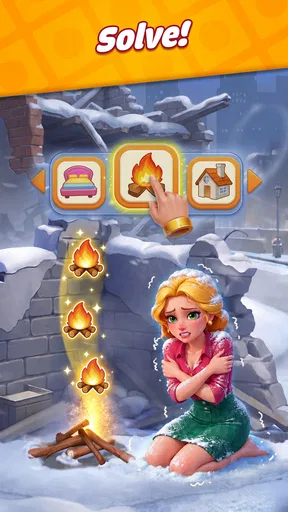

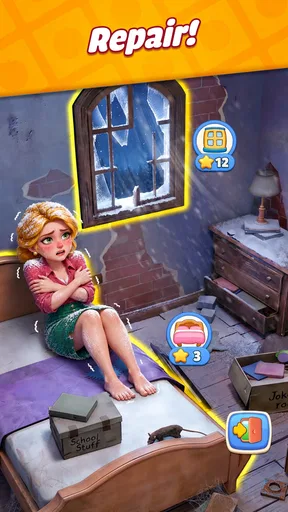

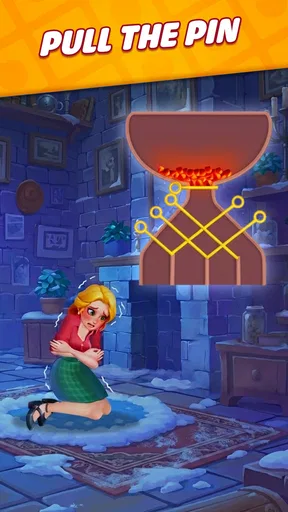
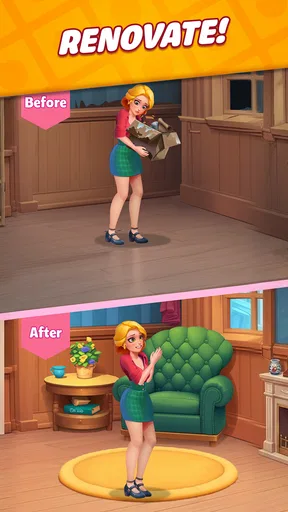
Our Review of Home Pin 4: Pull the Pin
 Analysis by Appyee
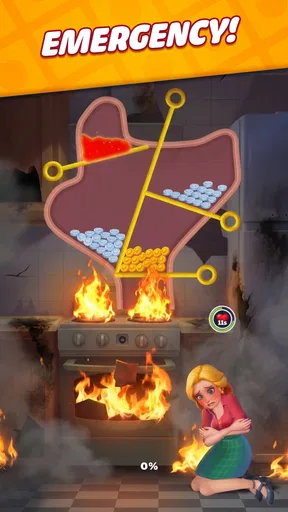
I spent time with Home Pin 4: Pull the Pin as a quick-play casual puzzle game, and my first impression was that it understands the appeal of a simple pin puzzle: look at a small scene, decide which obstacle should move first, and watch the situation unfold. That basic loop is easy to understand, but the game adds a story built around drama and humor, giving each puzzle a little more context than a completely abstract brain teaser.
That combination makes it an easy recommendation for short breaks. I can imagine opening it while waiting for a bus, taking a few turns before bed, or handing it to someone who wants a game that does not require a long tutorial. At the same time, its appeal depends heavily on whether you enjoy repeated visual problem-solving and light narrative presentation. If you are looking for a deep strategy game, a competitive challenge, or a long-form adventure, this is probably not the right fit.
How the pin puzzles feel in everyday play
The central idea is straightforward: pins divide a scene into areas, and pulling them in the wrong order can create trouble. The challenge is not usually about fast reactions. It is about pausing long enough to read the arrangement, identify what is dangerous, and predict what will happen after one barrier disappears. That makes the game approachable for people who prefer thinking games but do not want complicated controls.
I like that the format works well on a phone screen. A puzzle can be understood quickly, and the interaction is naturally suited to tapping rather than using several buttons or gestures. This is especially useful when playing with one hand. You do not need a quiet room or a large block of free time to make progress, although a little patience helps when the visual arrangement is less obvious.
The story gives the individual scenes a reason to exist. Instead of feeling like a disconnected collection of mechanical tests, the game presents its puzzles as part of a larger sequence filled with drama and humor. I would not approach it expecting a richly developed narrative, but the story framing does help maintain momentum between puzzles. It also gives casual players a reason to continue after solving a stage rather than treating each level as a disposable exercise.
A useful habit is to inspect the whole scene before touching anything. I found that the most avoidable mistakes came from reacting to the most visible pin instead of considering where objects, hazards, or characters might move next. In other words, the game rewards a short planning pause. That is a small but important distinction from purely reflex-based casual games.
Why the order of actions matters
The strongest moments come from recognizing that the obvious move is not always the safe one. A pin may appear to open a path, but removing it first can change the position of everything around it. I recommend treating each move as a question: what space will become connected, and what will be able to travel through it afterward? This way of reading the board is more reliable than simply trying the largest or most central pin.
When I made a mistake, I generally learned something useful from it. The failed attempt showed which area had been protected or which sequence had caused the problem. That makes retries feel more meaningful than random guessing. Still, players who dislike trial and error may find some situations frustrating, particularly when the result is not immediately clear from the layout.
There is also a practical advantage to not rushing. Because the game belongs to the casual category, it is easy to assume every stage should be solved almost instantly. I found the opposite approach more enjoyable: examine the scene, identify the likely danger, and then commit. That turns a few seconds of tapping into a compact logic exercise rather than a sequence of impulsive guesses.
Progress without turning the game into a chore
The progression is best understood as a series of small problem-solving sessions. This suits players who like visible forward movement but do not want to memorize a large control system. I could play a little, stop, and return later without needing to reconstruct a complicated strategy. That makes it a good companion for irregular schedules.
There is a trade-off, though. A pin puzzle format naturally repeats its core interaction. The variety has to come from the arrangement of obstacles, the order of decisions, and the story presentation. If you need constant mechanical novelty, the game may begin to feel familiar sooner than a platformer, role-playing game, or larger adventure title. Its strength is focused simplicity, not a wide range of genres inside one package.
For parents deciding whether it is suitable for a young player, the listed content rating is Everyone. That makes the game easier to consider for shared family use, especially because the controls are simple enough to explain. I would still play alongside a younger child at first, not because the basic idea is difficult, but because discussing why a particular pin should move can turn the game into a useful reasoning activity.
It also works for adults who want something less demanding than a competitive multiplayer game. A realistic use case is a short evening break: I can play a handful of puzzles while waiting for dinner, stop after a mistake, and return later without feeling that I have abandoned a long match. That low commitment is one of the clearest reasons to choose it.
Fairness, purchases, and the pressure to continue
The game is free to download, which removes the biggest barrier to trying it. Its store information also lists in-app purchases priced from $1.99 to $3.99 per item. That is the part I would pay attention to before installing, especially if a child will be using the device. The purchase range is clear enough to establish that optional spending exists, but it does not by itself explain how often purchase prompts appear or what each item provides.
Because of that, my spending advice is simple: begin without buying anything and see whether the basic puzzle loop feels satisfying. There is no reason to commit money before you know whether you enjoy the visual logic, the story tone, and the pace of progression. If you do decide to spend, treat each item as a convenience rather than assuming it is necessary for ordinary play.
I would not describe the game as competitive in the usual sense. There is no reason for me to compare my performance with another player in a match or worry about someone gaining an advantage over me directly. That makes the fairness question different from the one I would ask about a multiplayer battle game. Here, the important issue is whether progress remains enjoyable without purchases and whether optional items create pressure when a puzzle becomes difficult.
From a player’s point of view, the healthiest approach is to separate solving from spending. First, reread the scene and consider another order. Then retry with a deliberate plan. Only after deciding that the puzzle itself is no longer enjoyable should you consider whether an optional purchase is worth it. Spending should not become the automatic response to a mistake.
The game’s broad audience also makes this distinction important. A casual title with an Everyone rating can be attractive to younger players, who may not always recognize that a small individual purchase still counts as real spending. I would use the device’s purchase controls and explain the rule before handing it over. That is practical advice for any free game with paid items, and it is particularly relevant here because the game is designed to be easy to pick up.
What I could judge, and what remains unclear
I could judge the core experience directly: the pin puzzles are easy to understand, the scenes encourage planning, and the story framing adds personality. I could also judge the practical fit. It is comfortable as a short-session game, friendly to casual players, and less demanding than a game built around rapid reactions or long uninterrupted sessions.
Some purchase-related questions require a closer look inside the app before making a personal decision. The listed item range tells me the possible price level, but it does not tell me which items are offered at a given point, how frequently they appear, or whether a player can comfortably continue without them. I would check those screens myself rather than assuming that every free game handles purchases in the same way.
The same caution applies to long-term variety. The game’s premise is clear, and the story promises drama and humor, but the store summary does not provide a detailed breakdown of every puzzle type or progression system. I would therefore recommend it based on the strength of its central idea, not on an expectation of a huge collection of unrelated mechanics.
That is not a criticism of the game so much as a useful boundary for expectations. A focused puzzle title can be enjoyable precisely because it does one thing clearly. The question is whether that one thing is enough for you over time. If you enjoy testing sequences and spotting consequences, it may remain appealing. If you need frequent changes in controls, setting, or objective, another casual game may suit you better.
How it compares with other casual choices
Compared with a simple match-three game, this one asks for more deliberate planning and less pattern matching. You are not mainly searching for identical pieces or building a chain under a timer. You are studying relationships between objects and deciding which action should happen first. That makes it a better choice when I want a small logic problem rather than a purely relaxing visual routine.
Compared with an endless runner, it is much less dependent on reflexes. I do not need to react to a rapidly changing track or maintain a rhythm for a long session. The benefit is that I can play while tired or distracted, as long as I am willing to stop and think. The drawback is that it lacks the energetic, immediate feeling that makes runners satisfying.
Compared with a traditional story adventure, the narrative is more of a supporting layer around the puzzles. The drama and humor help give the sequence character, but I would not choose this game if my main goal were complex dialogue, exploration, or character development. Its story is there to keep the puzzle journey moving, not to replace a full adventure game.
That comparison helped me place it correctly. I see it as a middle ground between a quick logic toy and a lightly presented story game. It is more purposeful than a throwaway distraction, but it remains accessible enough for someone who does not normally play puzzle games.
Device details and who should install it
Gamee Global is the developer, and the game has built a sizable audience, with an average rating of 4.5 from around 59 thousand ratings and more than 10 million installs. Those figures suggest that the concept has reached well beyond a tiny niche, although popularity alone does not guarantee that its pacing will match your taste. I would use those numbers as a reason to try it, not as a substitute for judging the gameplay yourself.
The current version is 1.3.2, and the listed minimum operating system is Android 7.0. That makes it accessible to many older Android devices, which is useful for people who keep a secondary phone or share an older handset at home. As always, the actual comfort of play depends on the device, screen size, and personal tolerance for small visual details, but the stated system requirement is not demanding.
The game was released on January 15, 2025, so I would think of it as a relatively recent entry in the Home Pin line rather than an old casual title being revived. The short name shown in the store is Home Pin 4, while the fuller presentation identifies the pull-the-pin concept. For someone browsing a crowded game library, that distinction helps explain what kind of experience to expect before opening it.
I would recommend it most strongly to players who enjoy visual cause-and-effect puzzles, prefer short sessions, and like a little story flavor around their challenges. It is also a sensible choice for families looking for a game that is easy to explain and does not demand fast coordination. The best way to play is patiently: scan the board, identify the risky connection, and use failed attempts as information rather than as a reason to spend.
I would skip it if you want a completely purchase-free experience, a competitive ranking environment, or a deep narrative with extensive exploration. I would also look elsewhere if repeated pin-order puzzles quickly feel repetitive to you. A more varied puzzle collection or a traditional adventure game would offer broader systems and a different kind of satisfaction.
My trust verdict after playing
My overall view is positive but measured. The game presents a clear casual idea, makes it easy to begin, and uses drama and humor to give its puzzle sequence some personality. Its most valuable quality is that it rewards a calm reading of the scene rather than demanding speed. That makes it a good everyday option when I want a small challenge without committing to a long session.
The spending side deserves awareness, not alarm. It is free, but paid items are listed between $1.99 and $3.99 each, so I would set boundaries before playing, particularly on a shared device. I would not buy anything simply because a puzzle went badly. Try a slower approach first, and decide whether the game remains enjoyable on its own terms.
In the end, the fairest way to judge Home Pin 4 is by the quality of its puzzles, not by the promise of optional purchases. If the pin sequences and light story keep you curious, the game is easy to recommend as a friendly casual download. If you need richer mechanics or complete certainty about every aspect of spending before you start, wait until you have reviewed the in-app purchase screens for yourself. For my use, it succeeds as a compact, approachable logic game with enough character to make a quick break feel worthwhile.
Privacy and Permissions
See what permissions an app requests and how it handles your data.
- Wi-Fi connection information
- view Wi-Fi connections
- Other
- view network connections, full network access, control vibration, prevent device from sleeping, Google Play license check
Verdict
Strengths of Home Pin 4: Pull the Pin
- Simple pull-the-pin controls are easy for players of all ages.
- Short levels make it convenient for quick gaming sessions.
- The rescue-focused puzzles offer a clear and satisfying objective.
- Offline play is useful when traveling or without mobile data.
- Gradually harder stages provide a gentle learning curve.
Limitations of Home Pin 4: Pull the Pin
- Some puzzles may feel repetitive after extended play.
- Hints and extra resources can encourage optional spending.
- Ads may interrupt gameplay between completed levels.
- Later solutions can depend on trial and error more than logic.
- The story and character development are relatively limited.
Similar Picks in This Category
View All
My Talking Angela
Outfit7 Limited4.2

My Talking Tom
Outfit7 Limited4.3

Pou
Zakeh4.2

My Talking Tom 2: Pet Game
Outfit7 Limited4.3

Candy Crush Saga
King4.6

Bridge Race
Supersonic Studios LTD4.1
Frequently Asked Questions
What is Home Pin 4: Pull the Pin?
Home Pin 4: Pull the Pin is a casual puzzle game built around the familiar pull-the-pin mechanic. You solve compact levels by removing pins in the correct order, avoiding traps, collecting useful items, and helping characters reach safety. Alongside the puzzles, the game includes a home or renovation-style progression system, giving players extra rewards and visual goals beyond simply completing each stage.
How do you play Home Pin 4: Pull the Pin?
Each level presents pins, characters, hazards, and interactive objects arranged in a small puzzle scene. Tap or pull the pins one at a time, then watch how the objects move and react. The main challenge is predicting the result before making a move: removing the wrong pin can release an enemy, destroy a reward, or put the character in danger. If you make a mistake, you can usually restart the level and try a different order.
Is Home Pin 4: Pull the Pin free to download and play?
Home Pin 4: Pull the Pin is generally available as a free-to-download game, allowing players to begin solving levels without paying upfront. However, free versions of this type of puzzle game may include advertisements, optional purchases, or reward systems connected to watching ads. Before downloading, check the current store listing for the latest information about in-app purchases, advertising, supported devices, and any regional availability differences.
Does Home Pin 4: Pull the Pin require an internet connection?
The basic puzzle gameplay may work without a continuous internet connection, which makes the game suitable for short sessions while travelling or when mobile data is unavailable. Nevertheless, an internet connection can be required for advertisements, cloud-related features, updates, rewards, or in-app purchases. Availability of offline play can also change after updates, so it is worth testing the game in airplane mode after installation.
Is Home Pin 4: Pull the Pin suitable for children?
The game is easy to understand and uses simple tap-based controls, so many children can learn the basic mechanics quickly. Some stages may still require planning and trial and error rather than fast reactions. Parents should review the age rating and privacy information on the relevant app store, especially because advertising or optional purchases may be present. Younger players may also need supervision when rewards encourage watching ads or spending money.
Play our best games!


